If your final creative act could be pre-designed, what would it be?

ArtStorming asked me that question, and on Sunday they published my answer as a Creativity Toolkit, the first feature in their Remains To Be Seen edition. The answer came out before I could polish it...

My final creative act would not be an object. It would be a room. Natural light. No wall labels. Everyone my work has reached, standing together, no longer performing or masking. Then ten minutes of silence. Not mourning. Arrival.

Everything I have made in graphite, pastel, candy and gauze was a rehearsal for that one unbroken quiet.

That line surprised me when I read it back. For three decades my work has asked people to feel first, then think, then act. The landscapes ask you to feel. Existential Snacks asks you to think, and to take responsibility for what you feed your mind. The room is the exhale after all of it.

ArtStorming also asked for one small practice readers could borrow. Mine is gratitude, constant and a little relentless. I thank the waiter. I thank the sky for giving me eyes to see it. I thank my hands and my heart, broken parts included. Every morning I journal, and then I paint.

Their editors chose my piece Empty Womb for the cover of CENSORED!, their essay on how Meta's algorithms erased their writing about Remains To Be Seen. A platform tried to quiet that work, and now the same work opens a feature about deep listening. I will take that.

When they asked which single object would tell my story, I named one of the Infertility Project baby blankets, hand-crafted from clinical IVF syringes. "All my hopes and dreams undone..." Then I corrected course. Objects matter less to me than impact, the kind that moves from one person to the next.

Hands on my heart, I hope people remember me as a warrior for Love.

Read the full Toolkit on ArtStorming's Substack, and see the work at FirestoneArt.com

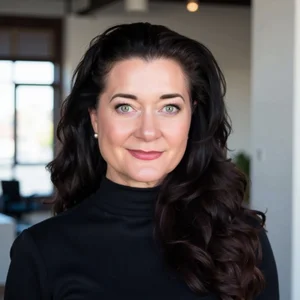
Robbi Firestone

Robbi Firestone is a contemporary American painter and conceptual artist working between New York City and Santa Fe, New Mexico. Her practice spans three decades of sustained inquiry into how beauty, urgency, and ethical responsibility coexist in a fragile world.

Her paintings, in oil, acrylic, pastel, and graphite, emerge from sustained observation of landscape and sky, rooted in the high desert of New Mexico. These are not depictions of place but states of being: the land as inner weather, the horizon as meditation on presence and the radical act of sustained attention.

Her conceptual practice, most notably the 2026 series Existential Snacks: Food for Thought, deploys mass-produced consumer materials as a Trojan horse, seductive in their familiarity and disturbing in their implications, addressing ecological collapse, cultural numbness, and the human tendency to consume without thinking.

These are not two separate bodies of work. They are one philosophical position expressed in two registers: feeling as the ground from which thought becomes possible; thought as the ground from which action becomes necessary.

Firestone's work has received formal recognition from leading figures in the contemporary art world.

Louis Grachos, Executive Director of SITE Santa Fe, writes: "Robbi Firestone's Existential Snacks project is a brilliant contemporary extension of the longstanding tradition of Satirical Artworks. Innovative in her use of materials, Firestone's paintings/sculptures reveal a sense of humor, are clever and reveal a substantial insight into her subject matter which makes this series so successful."

Merry Scully, Head of Curatorial Affairs and Curator of Contemporary Art at the New Mexico Museum of Art, wrote of The Infertility Project: "You are telling a powerful story...this project may take on a life of its own and take years to unfold," drawing comparison to Judy Chicago's The Dinner Party. The National Museum of Women in the Arts described her work as "a testament to the power of transforming personal pain into a benefit for the greater good."

The Infertility Project premiered at the United Nations in parallel with the Commission on the Status of Women. The project became the subject of a documentary film by Betsy Chasse, director of What the Bleep Do We Know, available on Amazon Prime.

Her work has been featured in The New York Times, Worth Magazine, the Boston Herald, the Huffington Post, and the Santa Fe New Mexican.

Firestone's work is held in distinguished private collections across the United States. She is currently represented by 203 Fine Art, Taos, New Mexico.

Studio visits are by appointment in New York City and Santa Fe.

https://www.FirestoneArt.com
Next
Next

My Ancestors Blood & Bones. Become my Paintings…