Into That Light: Agnes Martin & NMWA Artist Talk

Open to front hall of Gallery 215, Taos, New Mexico.

Thick adobe walls. Ancient wooden floors. Carvings.

Space holding silence the way only very old walls do.

Home to Untitled Orange and Yellow, 1994. Agnes Martin. Acrylic and graphite on canvas. Sixty inches by sixty inches. A grid painting from the final decade of her life, having already re-rooted in New Mexico. She stripped everything unnecessary from her practice. She became one of the most consequential painters of the twentieth century.

Humbly, on July 18, my work steps into that hall.

Agnes Martin left New York in 1967, New Mexico bound. Built an adobe house in the desert. Made paintings about stillness. About the horizontal line. About what remains when you remove everything non-essential.

Not interested in expression. Interested in what she called "the experience of innocence." The undisturbed mind. The quiet that lives on the other side of all the noise we create.

I ask a similar question through different light.

My landscapes and sky paintings are rooted in the same New Mexico sky Martin painted. The silence. The insistence that presence, being in a room with a painting, is enough. Is everything.

Agnes Martin knew that. She built a life around knowing it.

On August 8, the National Museum of Women in the Arts, New Mexico Chapter, has invited me to present an artist talk and studio visit at the hacienda, surrounded by thirty paintings from my solo show, The Long Horizon.

I am honored. Humbled. I choose these words consciously.

The lineage of artists this chapter has chosen to recognize: Agnes Martin, Rose Simpson, Roxanne Swentzell, Jaune Quick-to-See Smith, Judy Chicago, Patricia Michaels, Lynnette Haozous, among them. This is a significant context to enter. I am humbled, and I carry it.

Co-chairs Lucy Finch and Tracy King, Program Director Lynnette Jennings: I am grateful for your vision and your trust.

Martin once wrote: "The best things in life happen to you when you're alone."

She meant the paintings. She meant the silence that makes them possible.

I think she also meant the moment of recognition: when you stand in front of a work and feel, without being told, that something true has been made. From the artist's very existence. From her existence. From my own.

That is what I hope for in every painting I put into the world.

That is what I felt, the first time I stood in that front hall.

August 8. Artist talk and studio visit. Gallery 215, 215 Ranchitos Road, Taos, New Mexico. National Museum of Women in the Arts, New Mexico Chapter.

Inquiries: maureen@203fineart.com, 917-518-0430.
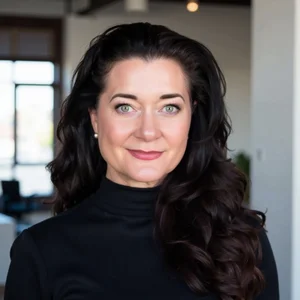
Robbi Firestone

Robbi Firestone is a contemporary American painter and conceptual artist working between New York City and Santa Fe, New Mexico. Her practice spans three decades of sustained inquiry into how beauty, urgency, and ethical responsibility coexist in a fragile world.

Her paintings, in oil, acrylic, pastel, and graphite, emerge from sustained observation of landscape and sky, rooted in the high desert of New Mexico. These are not depictions of place but states of being: the land as inner weather, the horizon as meditation on presence and the radical act of sustained attention.

Her conceptual practice, most notably the 2026 series Existential Snacks: Food for Thought, deploys mass-produced consumer materials as a Trojan horse, seductive in their familiarity and disturbing in their implications, addressing ecological collapse, cultural numbness, and the human tendency to consume without thinking.

These are not two separate bodies of work. They are one philosophical position expressed in two registers: feeling as the ground from which thought becomes possible; thought as the ground from which action becomes necessary.

Firestone's work has received formal recognition from leading figures in the contemporary art world.

Louis Grachos, Executive Director of SITE Santa Fe, writes: "Robbi Firestone's Existential Snacks project is a brilliant contemporary extension of the longstanding tradition of Satirical Artworks. Innovative in her use of materials, Firestone's paintings/sculptures reveal a sense of humor, are clever and reveal a substantial insight into her subject matter which makes this series so successful."

Merry Scully, Head of Curatorial Affairs and Curator of Contemporary Art at the New Mexico Museum of Art, wrote of The Infertility Project: "You are telling a powerful story...this project may take on a life of its own and take years to unfold," drawing comparison to Judy Chicago's The Dinner Party. The National Museum of Women in the Arts described her work as "a testament to the power of transforming personal pain into a benefit for the greater good."

The Infertility Project premiered at the United Nations in parallel with the Commission on the Status of Women. The project became the subject of a documentary film by Betsy Chasse, director of What the Bleep Do We Know, available on Amazon Prime.

Her work has been featured in The New York Times, Worth Magazine, the Boston Herald, the Huffington Post, and the Santa Fe New Mexican.

Firestone's work is held in distinguished private collections across the United States. She is currently represented by 203 Fine Art, Taos, New Mexico.

Studio visits are by appointment in New York City and Santa Fe.

https://www.FirestoneArt.com
Previous
Previous

The Standard: Exemplary

Next
Next

The Collectors Are Coming! A Party for Grand Cornelia